
Top Residential Garage Door Safety Tips
Even though garage doors are incredibly common in houses, many people are unaware of the dangers associated with these doors if they don’t follow safety precautions. Because you likely use your garage door daily or weekly, you want to stay safe. In this post, we’ll detail garage door safety tips to help you and your loved ones stay protected.
1. Inspect the Safety Sensors
It’s essential to regularly check that your garage door sensor is working properly. These sensors make automatic garage doors work, and they can stop the garage door from closing if someone or something is in the way of the sensor. But first, you should understand how garage door sensors work.
These garage door safety sensors have two main elements:
- The photo-eye: These are infrared sensors placed on the sides of the garage door and are typically 2-6 inches off the ground. The main purpose of photo-eyes is to prevent the garage door from closing if something is in the way.
- The line of sight: This is the infrared beam of light the photo-eyes send across to each other. For the garage door to close, nothing can be in the way of the line of sight.
One common problem with garage door sensors is that the photo-eyes can become dirty over time. Make sure to clean these lenses often so you ensure they work properly. Adding this task to your list of outdoor chores is an easy way to remember to do it.
2. Change Your Opening Code
One of the most crucial garage door safety tips to follow is to change your code frequently. It’s best practice to change your garage door code fairly often so you don’t accidentally give away your code to potential thieves. Most modern garage doors come with a keypad that makes it easy to update your opening code.
Here are some general steps to take if you want to increase opener safety by changing the code:
- The first thing you have to do is reset the garage door motor. There’s usually a “reset” button found on the motor. By resetting the motor, the garage door will forget the old code.
- Once the motor has been reset, enter your new code on the keypad. On some keypads, a light will turn on, indicating the motor has accepted the new code.
- After the new code is set, reprogram any remotes you have so they’ll be able to open the automatic garage door.
3. Check the Auto-Reverse Feature
All garage doors made after 1991 have safety standards that make the door reverse its direction if something gets in the way of its path. Therefore, your garage door will likely have these safety requirements.
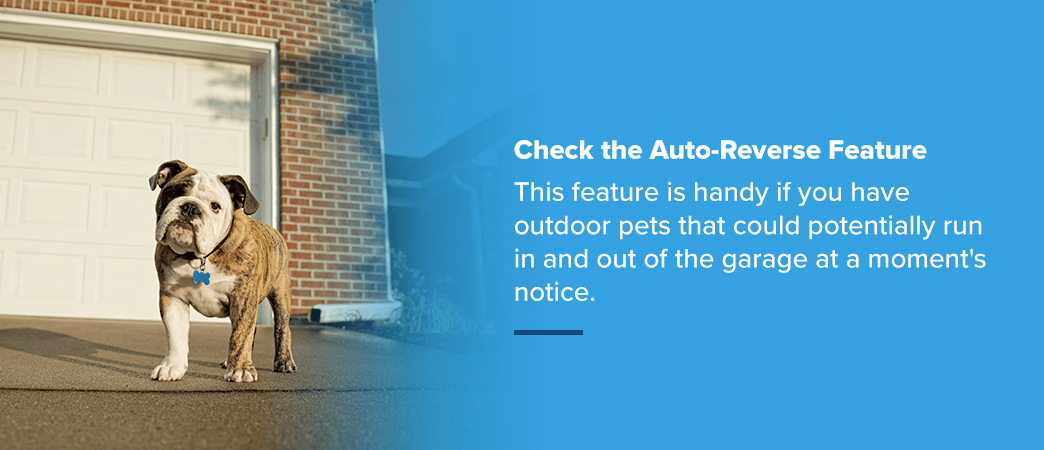
The auto-reverse feature works using the previously mentioned sensors. If something gets in the way of the line of sight, the garage door will stop and change direction. This feature is handy if you have outdoor pets that could potentially run in and out of the garage at a moment’s notice.
It’s relatively easy to inspect your garage door’s auto-reverse. To test, place a board under the garage door. If the sensors detect the object, the garage door will immediately reverse, which means your door is functioning properly. If the garage door fails the test and doesn’t reverse, have the door inspected immediately.
4. Learn How to Operate Your Garage Door Manually
To ensure safety in case of an emergency, it’s smart to learn how to operate your garage door manually. Situations like severe storms and power outages are capable of temporarily disabling the automatic garage door feature. As a result, you’ll have to operate the door without power.
If you ever need to manually open your garage door, follow these steps:
- First, make sure the garage door is in the down position, meaning the door is touching the ground. It can be very dangerous to attempt operating the door even if it’s just partially open.
- After you have checked that the garage door is in the down position, pull the emergency release cord. The release cord is typically red. By pulling it, you’ll disable the automatic garage door features.
- Now, manually open or close the garage door. If you notice the door is abnormally heavy, it may be because of a broken spring. If a spring in the garage door is broken, contact a repair service as soon as you can.
5. Unplug the Door Opener Unit When You’re Away
If you’re going to be away from home for an extended period of time, unplug the door opener unit so no one can open the door. This tip is smart to follow if you want to protect your home or garage while away on vacation.
Here are some general tips to follow if you want to unplug your door opener unit:
- Begin by closing the garage door. While the unplugging process can be done with the door open, it’s easiest and safest when the door is completely closed.
- Next, pull the emergency release. When pulled, the garage door will disengage from the automatic opener.
- Once the emergency release is pulled, you can manually open and close the garage door.
- After returning home, you can reconnect the garage door to the automatic opener by pulling the emergency release and pushing the remote garage door opener.
6. Regularly Examine Your Garage Door
To make sure you’re practicing correct garage door safety, inspect your door regularly, as it can become worn down over time. Here are a few signs of aging garage doors:
- Slow movement: If you notice your garage door is moving slower than usual, it could be a sign your door is getting old. If you’re worried about the garage door’s slow movements, contact a repair service.
- Increased vibration: Garage doors operate less smoothly as they get older. Vibrations in garage door openers are typically caused by internal components such as old motor bearings, deformed shafts and outdated armatures.
- Increased noise: If the garage door is louder than usual, it could be a sign your door is aging, so it’s not as safe. Reasons your garage door is louder than usual can include old or damaged springs and the grinding of gears. If you notice a “popping” sound from your garage door, it could be a sign the door is in danger of coming off the track.
Contact Asheville Garage Door LLC for Garage Door Repairs
If you’re concerned about the safety of your garage door, contact Asheville Garage Door. Our team of experts can diagnose any garage door problem and ensure your garage door is fully functioning and safe!